


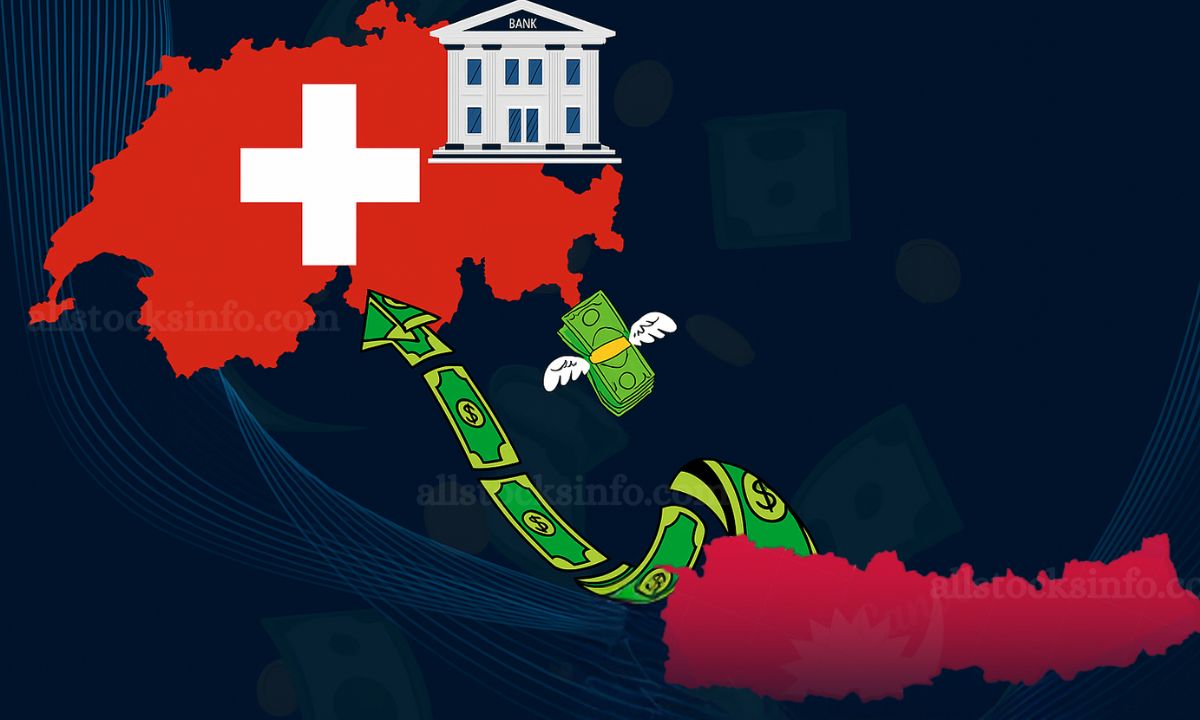
New data from the Swiss National Bank show that funds linked to Nepali clients in Swiss banks have fallen for the second year in a row. But interestingly, the amount remains much higher than before the pandemic.
How Much Money Are We Talking About?
Nepali deposits in Swiss banks fell to 387 million Swiss Francs (Rs 65.56 billion) in 2024. That’s below the record high of 482.5 million CHF (Rs 81.74 billion) in 2022. Although the decline will look dramatic, overall it is relatively high against last year.
Nepal’s Rank in South Asia
Even with the decline, Nepal remains at third position in South Asia, ahead of Pakistan and Sri Lanka only. Here is the ranking country-wise:
| Country | Swiss Bank Deposits (2024) |
|---|---|
| 🇮🇳 India | 3.5 billion CHF |
| 🇧🇩 Bangladesh | 589.5 million CHF |
| 🇳🇵 Nepal | 387.0 million CHF |
| 🇱🇰 Sri Lanka | 307.1 million CHF |
| 🇵🇰 Pakistan | 271.7 million CHF |
| 🇦🇫 Afghanistan | 3.1 million CHF |
| 🇧🇹 Bhutan | 0.7 million CHF |
Where Is This Money Coming From?
Experts have speculated the source of these funds may be:
- Over-invoicing of imports (to smuggle more cash overseas)
- Government contract kickbacks
- Political corruption and illegal capital flight
- Legitimate Non-Resident Nepalis (NRNs) remittances
Swiss banking secrecy, though, renders it nearly impossible to know who the depositors are and where the money came from.
How Swiss Banks Raise Eyebrows?
Swiss banks are typically considered a haven for dirty money, and there is a reason why:
- No public account disclosure
- High-level anonymity
- Limited cooperation with foreign inquiries
Even while global pressure mounts for these activities to be remade, Nepal lacks strong mechanisms to track down or recover clandestine foreign wealth.
Are Nepali Elites Routing Their Funds Elsewhere?
The persistent decline in Swiss deposits may reflect the fact that Nepali elites are shifting their funds to alternative money centers—like Singapore, Ireland, or Dubai—such money centers that themselves offer financial secrecy with greater mobility.
The Big Picture
Despite numbers falling, the reason that billions of rupees still sit idle in foreign banks is a reminder of Nepal’s ongoing battle against financial transparency, corruption, and inefficient regulation. Legal or not, the lack of answers continues to raise very serious unanswered questions.
