


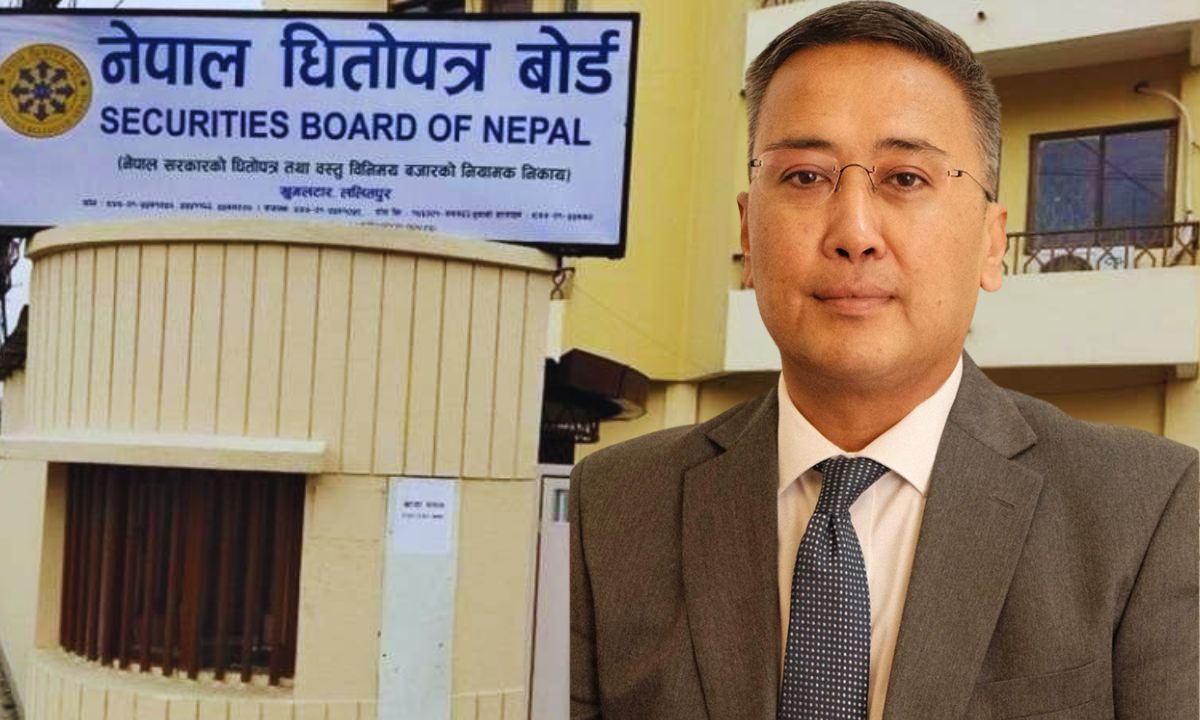
The Securities Board of Nepal is going through one of its most unstable periods in recent years. The country’s main capital market regulator is facing internal conflict, political pressure, and serious allegations against its top leadership. What was once a quiet regulatory body has now become the center of public and investor attention.
At the heart of the crisis is SEBON chairman Santosh Narayan Shrestha. Multiple complaints have been filed against him at different state agencies, accusing him of corruption and abuse of authority. These complaints have reached the anti corruption body, the finance ministry, and the prime minister’s office. Instead of addressing the accusations openly, the chairman has taken leave and remained mostly out of contact, leaving the institution without clear leadership.
His absence has deepened the confusion inside SEBON. Employees who should have been working together to protect the regulator have instead turned against one another. Different staff groups are now blaming each other, while daily regulatory work continues under uncertainty. This internal split has weakened SEBON at a time when strong leadership is most needed.
The roots of this conflict go back to a long employee protest. SEBON staff had earlier launched a weeks long agitation after the finance ministry questioned the legality of employee welfare and security funds that had existed for years. The protest disrupted normal operations and slowed decision making in the capital market, frustrating investors and companies alike.
As pressure grew, then finance minister Dr Rameshwar Khanal stepped in. However, rather than resolving the dispute, his involvement is believed to have worsened it. According to staff members, the ministry quietly backed one group of employees while sidelining others. This strategy created deeper divisions and prevented a lasting solution.
Eventually, the protest ended after assurances were given that employee demands would be addressed. A committee formed by SEBON later advised that staff benefits should not be cancelled abruptly and that alternative arrangements should be made if changes were required. The board accepted this view and sent its recommendation to the finance ministry.
Months have passed since then, but the promises remain unfulfilled. Instead of progress, employees began hearing that some of their own colleagues had complained to the ministry and the anti corruption body, saying the welfare funds should be scrapped and past benefits recovered. This gave officials an excuse to delay action, leaving many staff feeling betrayed.
Just as frustration inside SEBON was growing, a much bigger controversy surfaced. Chairman Shrestha was accused of pushing forward the IPO process of Reliance Spinning Mills at unusual speed by misinterpreting a court order. Critics claim the decision unfairly favored the company and that the chairman personally benefited from the move. These allegations have placed him in the most difficult position of his professional life.
Sources close to the finance ministry say the Reliance case became an opportunity to act against the SEBON chairman. With public criticism increasing, the ministry allegedly began preparing the ground for his removal. Once again, internal divisions within SEBON were used as a tool to weaken his position.
Employee organizations inside SEBON have now openly split. One group is preparing protests demanding the chairman’s resignation. Another group, angered by broken promises from the finance ministry, is considering protests against the minister himself. What was once a united workforce now stands clearly divided.
The impact of this split is already visible. Even senior SEBON officials have stopped defending their chairman in public. During a recent meeting with young retail investors, top executives avoided answering tough questions about the Reliance IPO. Instead of offering clarification, they told investors to direct their questions to the chairman, distancing themselves from his decisions.
This public silence from senior officials has further isolated Shrestha. He now faces pressure from the finance ministry, growing anger among investors, and open non cooperation from within his own institution. According to insiders, this is why he chose to go on sudden leave, as the situation around him became increasingly unmanageable.The coming days will be crucial not only for the future of SEBON’s chairman, but also for the credibility of Nepal’s capital market regulator. How this crisis is handled may shape investor trust in the system for years to come.
