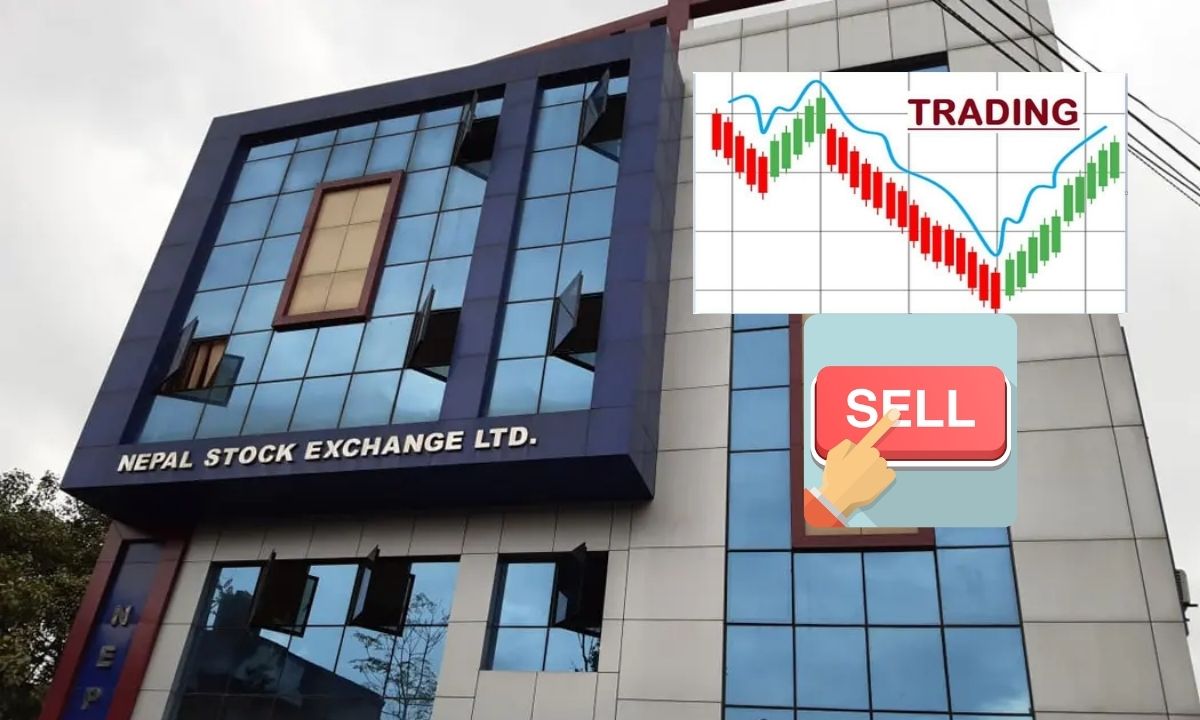
If you’ve been watching the NEPSE index for a while, you’ve probably noticed this pattern: the moment stock prices stop moving for a few days, selling suddenly picks up—and down goes the market. But is it really due to bad news or weak fundamentals? Not always.
Let’s break down what’s actually going on behind these sudden sell-offs.
Credit-Driven Trading: The Silent Trigger
Many traders on NEPSE don’t buy shares with their own money—they use broker credit or short-term exposure that usually lasts just 72 hours.
If share prices don’t rise within that window, pressure starts to build. Traders start thinking:
“If this doesn’t go up soon, I’ll have to sell before I get charged or liquidated.”
And just like that, a wave of selling begins, not because something is wrong with the company—but because time is running out on borrowed money.
A Market Dominated by Short-Term Thinking
Unlike global markets where big institutions play the long game, NEPSE is filled with individual retail traders. Most are in it for quick profits.
So when momentum disappears, fear kicks in. Traders rush to sell, thinking:
“Better to get out now than risk a fall.”
That mindset spreads quickly—one trader sells, then another, and the dominoes fall.
Past Burnouts Shape Present Fears
Many Nepalese investors have experienced long market crashes or sideways trends where their money was stuck for years. Because of that, even a few flat trading sessions trigger anxiety.
The thought is simple:
“Why wait and risk losses when I can take my money out now?”
This fear of being trapped often leads to unnecessary selling—even when nothing’s wrong fundamentally.
Fake Liquidity and Missing Support
NEPSE’s daily trading volume might look strong, but a lot of it is borrowed money. So when those credit-driven traders sell, there aren’t enough genuine buyers to hold up the market.
Add to that the lack of big institutional investors or mutual funds to step in—and the market becomes shaky at the first sign of trouble.
Social Media and Technical Charts Fuel Panic
Many NEPSE traders rely heavily on technical analysis and online tips. A few flat candles on a chart or a trending post saying “market looks weak” is enough to spark fear.
Everyone starts seeing the same patterns—and they all react the same way. The result? A rush to sell based on nothing more than chart signals and internet noise.
The Comfort of Real Estate
For most Nepalese, land still feels safer than stocks. It’s tangible, familiar, and culturally preferred.
So when the market slows down, many investors think:
“Why keep my money in something that’s not moving? I’d rather buy land.”
That shift pulls money out of the stock market and into real estate, adding to the selling pressure.
Settlement Pressure Adds to the Rush
NEPSE runs on a T+2 settlement system, but in reality, brokers often expect dues to be cleared within 48 to 72 hours. That creates even more time pressure on traders to sell quickly if the market isn’t moving in their favor.
Flat Markets Aren’t Peaceful—They’re Tense
In more developed markets, a few calm days usually mean the market is taking a breather. But in NEPSE, stillness is stressful.
It brings out the cracks in the system:
- Too much credit
- Too little patience
- No strong backup from institutions
- And a cultural pull toward more “secure” investments like land
Until these structural issues change, expect NEPSE to continue reacting sharply—even when prices just sit still.
In NEPSE, silence doesn’t mean stability—it means pressure building beneath the surface.